Another Life - the third book about Ty - is pretty much finished. The copy edit is done,I've inserted a few jokes, made some things clearer. I rewrote chapter two to take account of advice from my barrister friend. The cover is designed, the blurb agreed. Around the end of December proof copies should be available.
It's a funny feeling. As far as I know this will be the last book about Ty (although, mind you, I said that at the end of Almost True). I'm sad to say goodbye. When you write three books about a character, he's like part of the family. One of the best things this year has been finding out that readers enjoy reading about Ty and care about him as much as I enjoy writing about him. My big challenge now is working out how to move on.
Anyway, I've made a word cloud of Another Life which you can see here It doesn't tell you much, although if you look carefully there are some new and revived character names.
The girls of Elizabeth Garrett Anderson School in Islington are holding a competition to design a cover for Another Life. They asked if the model on the cover could come along to the school for a photo shoot, nice try, girls. I've told them that all three books in the series are getting a new look. When their competition is done I hope to be able to share all three new covers with you.
Sunday, 27 November 2011


Wednesday, 23 November 2011
Breaking free of the chains
 |
| WH Smith: Half price on all our top 20 celebrity hardbacks! |
Then she breaks the news to you.'I'm really sorry,' she says, 'WH Smith in Brent Cross/Wood Green/Luton Airport/the Arndale Centre didn't have your book.'
Argh! If only she'd checked first! I could have told her not to bother, guided her gently towards a lovely indie bookshop or Amazon. A debut author with a small publisher has to get very lucky indeed to get her book into the big chains, and my first book When I Was Joe, was not lucky enough.
In fact anyone who isn't a known best-seller, pretty much has to have a publisher able to pay large amounts to promote you, and a book which catches the eye of the buyers at supermarkets or chains, often because it is similar to other best-sellers. What was I thinking, writing a realistic 'gritty' (hate that word) thriller in 2009? Obviously, teens only wanted to read about vampires.
 |
| Waterstone's Islington promotes Almost True |
Doom and gloom abound. A received wisdom is growing up that without the big orders from the big chains, you don't stand a chance. You can't be a bestseller until you're already a best seller. Authors are all too often judged on their market performance in the first six months of their career - before they've had a chance to build up a readership through any other means than piling their books high in chains and supermarkets. And established authors are judged equally harshly, despite their past success.
So, hurray for this article in The Bookseller which challenges this notion.
'Publishers once bemoaned the passing of the backlist, yet now it is midlist titles they are concerned about as the focus is drawn ever closer to the bestseller charts.' writes Caroline Horn, quoting agents and publishers (notably Francesca Dow of Penguin) saying that there is less room in the market for a range of titles and writers. The news is particularly bad for those writing for 8-12 year-olds, pushed aside by all those teen paranormal clones.
HOWEVER - and rarely has a however been so welcome - Ms Horn does clever things with the figures to show that actually the children's market is growing and all is not as it seems.
'The frontrunners account for less of sales now than a decade ago....£62m for the top 10 authors compared with the market as a whole of £324m.'
She goes on to discuss different outlets stocking children's books, different formats selling well. And then - imagine my surprise! - she talks about my book
Publishers have to work much harder to achieve those sales, says Gail Lynch, sales and marketing director at Frances Lincoln. She cites Keren David's When I Was Joe as an example. This was published by Frances Lincoln on its fledgling YA list and while the title has not been supported by the major chains, sales have still reached nearly 10,000 copies, which Lynch attributes to the unflagging efforts of the author, sales reps, indies and the number of regional book awards it has featured in. But she adds that each and every sale has been "hard won".
Now, earlier in the article sales for another book of 3,700 were described as 'very modest', so the gap between success and disappointment seems to be pretty narrow, but it's still nice to be singled out as a good news story. I'd have added a big, fat, hopeful SO FAR after the figure of 10,000. Furthermore, When I Was Joe was always stocked by some, if not all, branches of Waterstone's, and I know several wonderful Waterstone's booksellers who have worked tirelessly to handsell my books (a particular thank you to Corinne in Islington, Gabriel in Thanet and Nicole at Piccadilly - and those are just the ones I know about). I very much hope that the move in Waterstone's to central ordering does not curb the impact of their enthusiastic booksellers who can make a real difference when they champion a book. There was a phase when it seemed that all the fan emails I received were from people who lived in or near Thanet.
And my third book, Lia's Guide to Winning the Lottery which manges to disguise its inner 'welcome grittiness' under a girly cover, is stocked by WH Smith and was on 3 for 2 at Waterstones, before that promotion was cancelled.
But yes, making any kind of impact was hard, and involved exceptionally hard work from the entire team at Frances Lincoln. I'm constantly impressed by the advantages to be found at this particular small publisher. Everyone cares about me and my book, everyone is interested in doing extra stuff which might just help sell a few copies here or there. They believe in growing sales slowly, they believe in a word-of-mouth ripple effect, they work and work to let people - librarians, reviewers, booksellers, teachers - know about me and about my books. They are wonderful and I owe them a lot.
As for me, what have I done to help my publisher sell books? I realised early on - before the book came out - that there were things that I could do that played on my strengths and were (apart from my time) completely free. I'm good with people and I'm an experienced journalist. So I blog. I facebook. I tweet. I make new friends, both virtual and real.
Some of the time I do this with a 'networking' hat on, and mostly I do it because it's fun and supportive and interesting and I meet wonderful people (only today I had lunch with a brilliant author who is also published by Frances Lincoln, Naima B Robert and I had been friends online for ages, but as she lives in Cairo and I'm in London this was our first actual meeting).
I do school visits, although not loads and loads. I try and say yes when I'm invited to speak at conferences and festivals. I've also worked hard to keep the books coming - four written in three and a half years. 'I do admire how you keep churning them out,' someone told me the other day, to the quiet sound of my grinding teeth.
I wish more people in the industry would take heed of Caroline Horn's article. Getting books into Tesco is not everything. Failing to get a Waterstone's promotion isn't the end of the world. Sometimes it's better to be patient than expect instant results. Trends are all very well, but good writing is more important.
The top ten children's authors are making an average £6m a year each. The rest of us - thousands of us - share the remaining £262 million. Our challenge is to earn a living from our writing. We can take some crumbs of hope from Caroline Horn's conclusion:
Where books are selling and how they are sold is changing, and the burgeoning internet and e-book markets will change this further. What hasn't changed, however, against all expectation, is that midlist and backlist titles, as well as the "quieter" new books, are selling—and they are selling even better than they did a decade ago.
Sunday, 30 October 2011
Writing for Children

Amanda's now giving up teaching the course, and I'm very honoured to have been asked to take over. It runs for ten weeks, starting January 17 or April 24; it will cover many aspects of writing for children, from picture books to Young Adult. It's for everyone, whether you're aiming for publication or just want to get out of the house on a Tuesday evening.
One of the most fun aspects of preparing for the course was thinking of a list of recommended books. There were so many I could have chosen, but in the end I picked the following:
Auslander - Paul Dowswell
Tall Story - Candy Gourlay
The Tiger Who Came to Tea Judith Kerr
The Cat Mummy Jacqueline Wilson
Charmed Life Diana Wynne Jones
How I Live Now Meg Rosoff
Showbiz Sensation: Showbiz Superstar (Stunt Bunny) Tamsyn Murray
There are so many other books I could have chosen, but this is a list with picture books and chapter books to YA, male and female protagonists, fantasy, historical, dystopia, realism, humour,
I'm excited about taking this new step - and a little nervous too. I've often thought I'd like to take the course again - never imagined this would be how. If you're interested in signing up, details are here.
Monday, 17 October 2011
The Shine/Chime Screw-up
How could they? They being the judges and administrators of the National Book Awards in the US who mixed up books and authors and created a huge painful mess.
I felt pain on behalf of both Myracle and Billingsley when I read this story - goodness knows how bad they must feel. Thing is, you don't write books with awards in mind (well, I suppose some people may, but I don't and nor do most writers.) If and when the call comes that your book has been honoured, it's incredibly special. It's a lovely surprise, a bonus, a joy - but also a stressful experience, as you're suddenly part of a competition you hadn't expected.
Authors are not athletes, looking to stomp the opposition. We try and write the best book we can, for our own reasons. It's wonderful to win, it's less wonderful to come close. It's demoralising and disappointing to feel over-looked. But to think you're on a shortlist and then get taken off? To hear that your book has been mixed up with another one? That's an insult.
Awards for childrens' books aren't really about the authors. They exist to get children reading and reviewing, talking and thinking about what makes a good book. Some spark creativity (the Angus Book Award is a good example, with pupils creating book covers and films inspired by the shortlisted books). Others develop debating skills - the Lancashire Book of the Year judges even take over the council chamber for their deliberations.
The best awards make all the short and long-listed authors feel special and celebrated. They take care of the authors involved and remember that we are - well, some of us are - artists with delicate egos, not X Factor contestants. I've heard horror stories about awards which read out the books in descending order ('and in tenth place...') or tell the lucky winner beforehand, leaving the other shortlisters in anxious suspense.
It's not really that difficult to tell the difference between 'Shine' and 'Chime'. It's not really difficult to be sensitive, thoughtful and accurate. Lauren Myracle didn't deserve to be treated like this. Nor did Andy Mulligan when he got booted off the Blue Peter shortlist. I hope that the publicity boosted sales for both of them. And I hope it didn't spoil Frannie Billingsley's moment either. Perhaps they can combine to write about the experience. And call it 'Shame'.
 |
| Shine - with an 's' and an 'n' |
Last week the shortlist of five was announced for the Young People's book award. Shortly afterwards, consternation, embarrassment, disaster. They'd listed Lauren Myracle's book Shine, when they meant Chime by Frannie Billingsley.
 |
| Chime with a 'c'and an 'm' |
At first, they clumsily added Myracle's book to the shortlist. Behind the scenes, pressure was put on her to withdraw. Today she did so, with enormous grace, saying: 'When I received the initial call about Shine being a finalist, I was humbled and honored to be in the company of such amazing authors. I was also deeply moved that in recognizing 'Shine,' the NBF was giving voice to the thousands of disenfranchised youth in America—particularly gay youth—who face massive discrimination and intimidation every day. So that something positive may come of their error, I have strongly suggested that the NBF donate to the Matthew Shepard Foundation [a charity focused on respecting human dignity among young people].”
The NBF have subsequently confirmed a $5,000 donation to the trust.I felt pain on behalf of both Myracle and Billingsley when I read this story - goodness knows how bad they must feel. Thing is, you don't write books with awards in mind (well, I suppose some people may, but I don't and nor do most writers.) If and when the call comes that your book has been honoured, it's incredibly special. It's a lovely surprise, a bonus, a joy - but also a stressful experience, as you're suddenly part of a competition you hadn't expected.
Authors are not athletes, looking to stomp the opposition. We try and write the best book we can, for our own reasons. It's wonderful to win, it's less wonderful to come close. It's demoralising and disappointing to feel over-looked. But to think you're on a shortlist and then get taken off? To hear that your book has been mixed up with another one? That's an insult.
Awards for childrens' books aren't really about the authors. They exist to get children reading and reviewing, talking and thinking about what makes a good book. Some spark creativity (the Angus Book Award is a good example, with pupils creating book covers and films inspired by the shortlisted books). Others develop debating skills - the Lancashire Book of the Year judges even take over the council chamber for their deliberations.
The best awards make all the short and long-listed authors feel special and celebrated. They take care of the authors involved and remember that we are - well, some of us are - artists with delicate egos, not X Factor contestants. I've heard horror stories about awards which read out the books in descending order ('and in tenth place...') or tell the lucky winner beforehand, leaving the other shortlisters in anxious suspense.
It's not really that difficult to tell the difference between 'Shine' and 'Chime'. It's not really difficult to be sensitive, thoughtful and accurate. Lauren Myracle didn't deserve to be treated like this. Nor did Andy Mulligan when he got booted off the Blue Peter shortlist. I hope that the publicity boosted sales for both of them. And I hope it didn't spoil Frannie Billingsley's moment either. Perhaps they can combine to write about the experience. And call it 'Shame'.
Sunday, 9 October 2011
Living the Metaphor
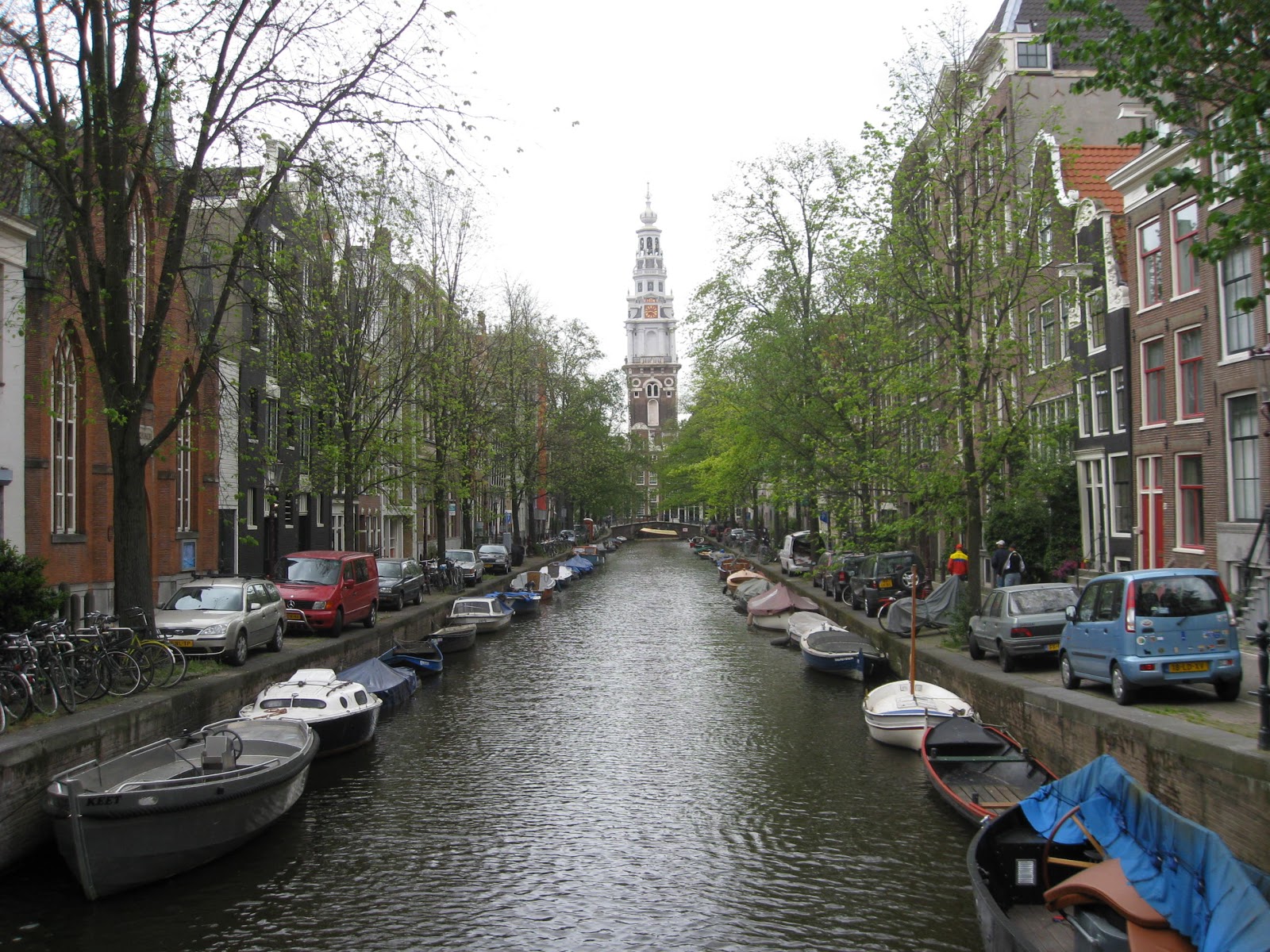 |
| My favourite view in Amsterdam, the Groenburgwal |
When you're going to have a baby, it's like planning a fabulous vacation trip - to Italy. You buy a bunch of guide books and make your wonderful plans. The Coliseum. The Michelangelo David. The gondolas in Venice. You may learn some handy phrases in Italian. It's all very exciting.
After months of eager anticipation, the day finally arrives. You pack your bags and off you go. Several hours later, the plane lands. The stewardess comes in and says, "Welcome to Holland."
"Holland?!?" you say. "What do you mean Holland?? I signed up for Italy! I'm supposed to be in Italy. All my life I've dreamed of going to Italy."
But there's been a change in the flight plan. They've landed in Holland and there you must stay.
The important thing is that they haven't taken you to a horrible, disgusting, filthy place, full of pestilence, famine and disease. It's just a different place.
So you must go out and buy new guide books. And you must learn a whole new language. And you will meet a whole new group of people you would never have met.
It’s just a different place. It's slower-paced than Italy, less flashy than Italy. But after you've been there for a while and you catch your breath, you look around.... and you begin to notice that Holland has windmills....and Holland has tulips. Holland even has Rembrandts.
But everyone you know is busy coming and going from Italy... and they're all bragging about what a wonderful time they had there. And for the rest of your life, you will say "Yes, that's where I was supposed to go. That's what I had planned."
And the pain of that will never, ever, ever, ever go away... because the loss of that dream is a very very significant loss.
But... if you spend your life mourning the fact that you didn't get to Italy, you may never be free to enjoy the very special, the very lovely things ... about Holland.
Now, at the time, this piece seemed neither relevant nor helpful, nor especially sensitive. It had, in fact, been written by Emily Perl Kingsley about the experience of bringing up a disabled child, and so it did not seem at all appropriate to us. 'Afghanistan,' I'd growl, whenever I thought of it. 'Or Siberia,. Or Hiroshima just after they'd dropped the bomb. Those would be more suitable metaphors. Not bloody Holland.'
And then - oh irony! oh coincidence! - just over a year later, we moved. To bloody Holland. And not at all at a time when I wanted to live there, or indeed live anywhere that wasn't my own home among my friends and family and people who spoke my language.
We were there for eight years. It was hard, and I was homesick, and depressed. I envied anyone who lived where they wanted to live. I found it hard to accept that I couldn't have that control over my life.
And then, you know what, there were windmills and glorious tulips and Rembrandts. There were Van Goghs and Mondriaans and wonderful new friends and beautiful parks. There was cycling and walking and picnics in the forest and many, many other lovely things. Amsterdam, it turned out, was a healing place.
I can never be as even-handed as Italy versus Holland when it comes to a child dying. I'm sure that many parents of disabled children would struggle with the concept as well. But truly, life without Daniel has not been as bleak or pointless as first we feared. Our lives took a different path, and that we learned a great deal along the way. It wasn't quite Italy/Holland - more like going to boot camp when you were expecting a spa break. It's not what you expect, and it's extremely hard and unfair - but in the end it's not a completely worthless experience.
I was reminded of this story last week, in synagogue for Kol Nidre, the service on the eve of the Day of Atonement. The rabbi read Emily Perl Kingsley's words and spoke about the consolations one can find in troubled times, whatever they may be. 'Living in Holland' was how he described it, and it was truly surreal as his rhetoric described my actual experience.
So, writers, be careful with your metaphors. Think them through. Someone may end up living them.
Sunday, 11 September 2011
Memories of 9/11
We were living in Amsterdam. My children were 1 and 5. My husband’s cousin had come to stay and I switched on the television so that the children could watch Tweenies while we had a cup of tea and a chat.The Tweenies weren’t there. Instead there was an office building, a blue sky. As we watched – irritated, the children whining for their programme – a plane smashed into the building.
What on earth? There was no sound, but a caption on screen said: ‘Pictures from the WTC.’ I only knew one WTC…the Amsterdam WTC, right next door to my husband’s office. I must have switched onto a Dutch channel, I panicked, this must be happening just down the road. What on earth? Was he OK?
Then the sound kicked in, and it was the BBC, and it was New York. And so my first feeling as I comprehended what was happening and where, was - momentarily - relief.
Ten years on, I still feel bad about those five seconds of relief.
What on earth? There was no sound, but a caption on screen said: ‘Pictures from the WTC.’ I only knew one WTC…the Amsterdam WTC, right next door to my husband’s office. I must have switched onto a Dutch channel, I panicked, this must be happening just down the road. What on earth? Was he OK?
Then the sound kicked in, and it was the BBC, and it was New York. And so my first feeling as I comprehended what was happening and where, was - momentarily - relief.
Ten years on, I still feel bad about those five seconds of relief.
Sunday, 4 September 2011
What I did (and didn’t do) this summer.
 |
| Soller, Mallorca |
1) Just before school holidays begin. Take son to buy uniform for his new school. Bought everything huge and in duplicate, so we will never have to do it again. Massive bill. Unusual and transitory sense of being organised and in control.
2) School holidays begin. Lecture family about my need to write in peace and quiet, for at least a few hours every day. They will have to amuse themselves. Tough.
3) Son has reading list for new school. Ignore instruction saying he has to read one from each genre (five books) and tell him his challenge for the holiday is to read all 25. Then change that to 24 because I don’t like the sound of one of the authors.
4) Daughter has nothing to wear. Take her to mall and buy stuff for her. Slightly less massive bill. No bikinis take her fancy. Gnash teeth. Beg her to buy bikini because it is in sale, even though she hates it. She refuses. Buy school skirts. Suggest that she tries them on so that if necessary we can change them. ‘Later,’ she says.
5) Son starts cricket summer camp. Sun is shining, son is happy. Rush to Starbucks and write and write and write.
6) Day two of cricket camp. It is raining. Son gloomy and bored. Daughter has nothing to wear. Suggest she tries on school skirts. ‘Later,’ she says.
7) Inspiration. We spend rainy day visiting lovely grandparents. Leave daughter there overnight with instructions to grandma to take her to buy bikinis. Hand over cash.
8) Day three of cricket camp. It is sunny, son is delighted. Rush to Starbucks. Write and write and write. Daughter texts pictures of bikinis she has bought with grandma. Then texts picture of price tag showing they were cheaper than the sale bargain she rejected. Huh.
9) Day four of cricket camp. Rain. Drive to grandparents to pick up daughter and bikinis, taking computer, go to their local library, write and write and write. Happy memories of visiting this library every week throughout childhood. Notice that teen section is a measly two bookcases. Do they have my books? They do not.
10) Cricket camp week two. Son decides he’s not enjoying himself as much as last week. ‘I’m not sure if I want to go this week,’ he says. Gnash teeth. Drop him off. Go to Starbucks and write and write and write.
11) Cricket camp week two, day two. ‘I really don’t want to go today.’ Drop him off. Starbucks. Write and write and write.
12) No more cricket camp. Really not enjoying it. Tell him he has lots of books to read. Try and write at home. Concentration shot to pieces.
13) HOLIDAY! We are off to Mallorca. Decide to take laptop so I can get up early every day and keep writing.
14) Midnight before holiday. We are getting up at 4am to go to Mallorca. Power cable for laptop breaks. Gnash teeth. Decide to take lightweight Netbook instead, and download manuscript onto Kindle. Congratulate self at techno know-how and calm under pressure.
15) Arrive Mallorca. Gorgeous but hot. Very hot. Family shrivel and droop in the sunshine. ‘I hope you’re not going to be too pathetic to do some sight-seeing,’ says husband.
 |
| View from the pool |
16) Too hot to write. Too hot to think. Sit in shade and admire view and read Caitlin Moran’s How to Be a Woman. ‘Stop laughing out loud,’ instruct children, ‘you’re embarrassing us.’
17) Day 2. Find shady spot and write and write. Son has made friends with other children at pool. Somehow we fail to notice that he has spent six hours in and out of the pool, only reapplying Factor 50 sun cream once.
18) Son has terrible sunburn. Plus he is vomiting (but has not got sunstroke, we check on internet). Spend day sitting in darkened room with him, reading teen romances (research!). Become obsessed with American book Anna and the French Kiss by Stephanie Perkins. Why does a boy with an English accent pronounce Anna ‘Ah’na’? Why does he talk about ‘transit systems’? Why has his mother never divorced her rich but abusive husband? Daughter advises me to get a life. I pre-order sequel.
19) Husband is bored with sitting around doing nothing except reading (possibly because he is reading serious books about Spain, and not teen romances). We go on a train to Palma. Palma extremely hot, but interesting. We wander around a big department store, and I take pictures in the book department of Spanish translations of books written by friend. ‘What are you doing?’ say children. ‘Stop! You’re being embarrassing!’ We visit English language bookshop. Ditto.
20) Next day. Husband still bored. Using son’s sunburn as excuse for another day trip. Today we go to Deia, beautiful village and former home of poet and author Robert Graves. It is very hot. ‘It’ll be really interesting,’ says husband.
21) Drive through Deia. Nowhere to park. Turn around and drive back. Just as I am declaring it completely impossible to park - we will have to abandon trip - a space comes up. Park. Walk through Deia. Children are hot and thirsty. Find a café, buy them drinks. Graves’ house is a fifteen minute walk down the road. Decide to leave grateful children in café (NB They are 15 and 11. We were not abandoning tots)
22) Walk to Graves’ house. It is midday. The sun beats down. Arrive at Graves’ house, feeling as though I have trekked through the Sahara desert. Discover there is large car park at Graves house.
 |
| Robert Graves' study. |
23) Husband is correct. Graves’s house is interesting. Also air-conditioned. Learn about his love triangle, with several wives, lovers, others. Learn about his many children, some of them abandoned in London when Graves made his home in Deia. Contemplate his tranquil study, where everything was - is – just the way he wanted it. Learn that Graves liked to work in complete silence. Huh.
24) Persuade daughter to read manuscript of book-so-far on my kindle. Her verdict: ‘You’re a pervert.’
25) Transfer from hotel to villa. We have swimming pool in garden. We have short walk to beach. We have no internet connection though.
26) We have satellite televison. Husband and I watch interesting play set in WW2. Seems to be an experimental script in which a narrator described every action on the screen. After some time realise that this is not an experimental script at all, but we are on a channel which has a commentary for blind people.
27) Ask husband if he’d known that all the time. He thought it was an experimental script as well.
28) Satellite stops picking up a signal at the climax of the play. Does this every night of the holiday.
29) Decide on a strategy to make the most of holiday without suffering from the heat. We have to get up and do things early in the morning, then take a siesta, then do more things in the evening.
30) Next morning wake at 11am, as usual. Kindle battery is flat. No way to charge it.
31) A few lazy days, in which I read a lot and write a bit. Go to Irish pub to watch Manchester United play Spurs. A Chelsea fan says to my husband: 'I see you support Manchester United, I don;t expect you come from there.' 'Actually, I do,' he replies.
32) Visit Alcudia which has a bull ring and Roman remains. Complain loudly about having to walk (in searing heat) through fields for HOURS to see Roman theatre. Surprised to find on walk back that HOURS was only five minutes.
 |
| Red devil |
33) Church of St Jaume, Alcudia. Find picture of St Michael trampling on Manchester United mascot, the red devil.
34) Holiday comes to an end all too soon. We agree that we had a brilliant time, we love Mallorca, the heat was no problem at all.
35) Back to England. Pouring rain greets us at Luton Airport. House smells musty and damp. ‘This is the way the house used to smell when we moved back in from Amsterdam!’ say the kids Hmm.
36) Go through post. Where are daughter’s exam results? Where is new electrical cable for laptop? It is a bank holiday, and we will have to wait two whole days for these things. On the other hand, a box of books has arrived from Amazon, the books my daughter wanted to take on holiday with her.
37) Try and email holiday writing from Netbook. Netbook’s internet server seems to be broken.
38) Shall we go and see The In-Betweeners Movie at the cinema or One Day? Daughter is horrified at the idea of us going to see the former. Manages to persuade husband that we will be thirty years older than anyone else there. So we see One Day. Hoot with laughter at Anne Hathaway’s accent, otherwise unimpressed. Two self-pitying people fall in love excruciatingly slowly, then..WHAM! And more self-pity. Nothing like as good as the book.
38a) Manchester United beat Arsenal 8-2. Family united in joyous celebrations (err...apart from my brother and nephew who support Arsenal).
39) Bank holiday over. Pick up power cable for laptop at post office. Charge up laptop, and try and load Netbook writing onto memory stick. Netbook does not seem to recognise memory stick. Hit head against wall.
40) Son is due to do watersports summer camp this week. Arrive at camp. Lady at reception points out that I have not booked the six hour day camp, but instead the two hour evening camp. ‘Come back at 4.30pm,’ she says. I protest that my booking letter said 10am. Go home. Booking letter says 4.30pm. Gnash, gnash.
41) Daughter and I set off to mall to buy dress that she spotted over the weekend - it was too big, so we ordered it in a smaller size. Halfway there, remember her exam results. Ring school in panic, they say we will have to come in and get them. Buy dress (and jumper, and jewellery, and other stuff that I have forgotten), eat sushi, rush to school. Hurray! Daughter has done very well in her sociology exam (half of GCSE). Very proud of her. Join queue to buy school uniform - which can only be bought from the school. After two minutes realise that we will be in queue for approx three hours, in order to buy one jumper and a tie. Abandon queue. Remember doing same thing last year. Gnash teeth.
42) Son loves evening class at watersports centre. I go to Sainsburys.
43) Next three days, son learns canoeing, kayaking and sailing. I write for one and a half hours each lesson in local café. Each day I rewrite the same chapter. Cannot move on without words trapped in Netbook.
44) Friday. There is a get-together planned for son’s new class at new school. They had one earlier in the holiday, and I enjoyed meeting the parents and getting a look at the kids. This time son and friend would rather play on the Wii. ‘We’re going to know these people for the next seven years,’ they say. ‘We've friended them on Facebook. We don’t have to go and spend time with them now.’
45) Weekend. Husband and I go and see The In-Betweeners. Notice with some relief that we are far from the oldest people there. Laugh hysterically throughout. All the way home husband shares reminiscences of teenage holiday to Fuengerola with best friends. Remarkable similarities.
46) Meet another parent whose child is going to son’s school. How many books has he read from the reading list, I enquire. ‘He’s read four out of five,’ he says. ‘How about your son?’ ‘He’s read 20.’ Later, Son: ‘Olly’s only read four of those books.’ Daughter: ‘You were conned. You’ll never hear anything about them again.’
47) First football match of the season for son’s team. It is pouring with rain. Goalie fails to turn up, so son is in goal for second half. He has no goalie gloves, but it doesn’t matter because he has no saves to make. His team wins 2-0.
48) Tomorrow is the last day of the school holidays. Our plans…I’m taking Netbook to be mended. Dropping off daughter and niece at the mall. And then son and I are going to the school uniform shop. Funnily enough, I forgot to buy sports shoes. ‘Last time I drove past there, they were queuing out onto the street,’ says my sister. Must remember to get daughter to try on school skirts.
49) Tuesday. Son starts new school. From now on he will leave the house at 7.10am and not return until 5pm. I will be able to write and write and write. But hang on, it’s daughter’s first day too. Or is it? ‘I’m just going in for an hour to pick up my timetable,’ she says. When is this hour? 2.10pm.
50) Wednesday September 7th. Everyone back at school. I have until the end of the month to meet my deadline. Tick tock.
Subscribe to:
Posts (Atom)