Monday, 17 October 2011

The Shine/Chime Screw-up

How could they?  They being the judges and administrators of the National Book Awards in the US who mixed up books and authors and created a huge painful mess.
Shine - with an 's' and an 'n'
Last week the shortlist of five was announced for the Young People's book award. Shortly afterwards, consternation, embarrassment, disaster. They'd listed Lauren Myracle's book Shine, when they meant Chime by Frannie Billingsley.
Chime with a 'c'and an 'm'
At first, they  clumsily added Myracle's book to the shortlist. Behind the scenes, pressure was put on her to withdraw. Today she did so, with enormous grace, saying:  'When I received the initial call about Shine being a finalist, I was humbled and honored to be in the company of such amazing authors. I was also deeply moved that in recognizing 'Shine,' the NBF was giving voice to the thousands of disenfranchised youth in America—particularly gay youth—who face massive discrimination and intimidation every day. So that something positive may come of their error, I have strongly suggested that the NBF donate to the Matthew Shepard Foundation [a charity focused on respecting human dignity among young people].”
The NBF have subsequently confirmed a $5,000 donation to the trust.
I felt pain on behalf of both Myracle and Billingsley when I read this story -  goodness knows how bad they must feel. Thing is, you don't write books with awards in mind (well, I suppose some people may, but I don't and nor do most writers.) If and when the call comes that your book has been honoured, it's incredibly special. It's a lovely surprise, a bonus, a joy -  but also a stressful experience, as you're suddenly part of a competition you hadn't expected.
Authors are not athletes, looking to stomp the opposition. We try and write the best book we can, for our own reasons. It's wonderful to win, it's less wonderful to come close. It's demoralising and disappointing to feel over-looked. But to think you're on a shortlist and then get taken off? To hear that your book has been mixed up with another one? That's an insult.
Awards for childrens' books aren't really about the authors. They exist to get children reading and reviewing, talking and thinking about what makes a good book. Some spark creativity (the Angus Book Award is a good example, with pupils creating book covers and films inspired by the shortlisted books). Others develop debating skills -  the Lancashire Book of the Year judges even take over the council chamber for their deliberations.
The best awards make all the short and long-listed authors feel special and celebrated. They take care of the authors involved and remember that we are  -  well, some of us are -  artists with delicate egos, not X Factor contestants. I've heard horror stories about awards which read out the books in descending order ('and in tenth place...') or tell the lucky winner beforehand, leaving the other shortlisters in anxious suspense.
It's not really that difficult to tell the difference between 'Shine' and 'Chime'. It's not really difficult to be sensitive, thoughtful and accurate. Lauren Myracle didn't deserve to be treated like this. Nor did  Andy Mulligan when he got booted off the Blue Peter shortlist.  I hope that the publicity boosted sales for both of them. And I hope it didn't spoil Frannie Billingsley's moment either. Perhaps they can combine to write about the experience. And call it 'Shame'.

Sunday, 9 October 2011

Living the Metaphor

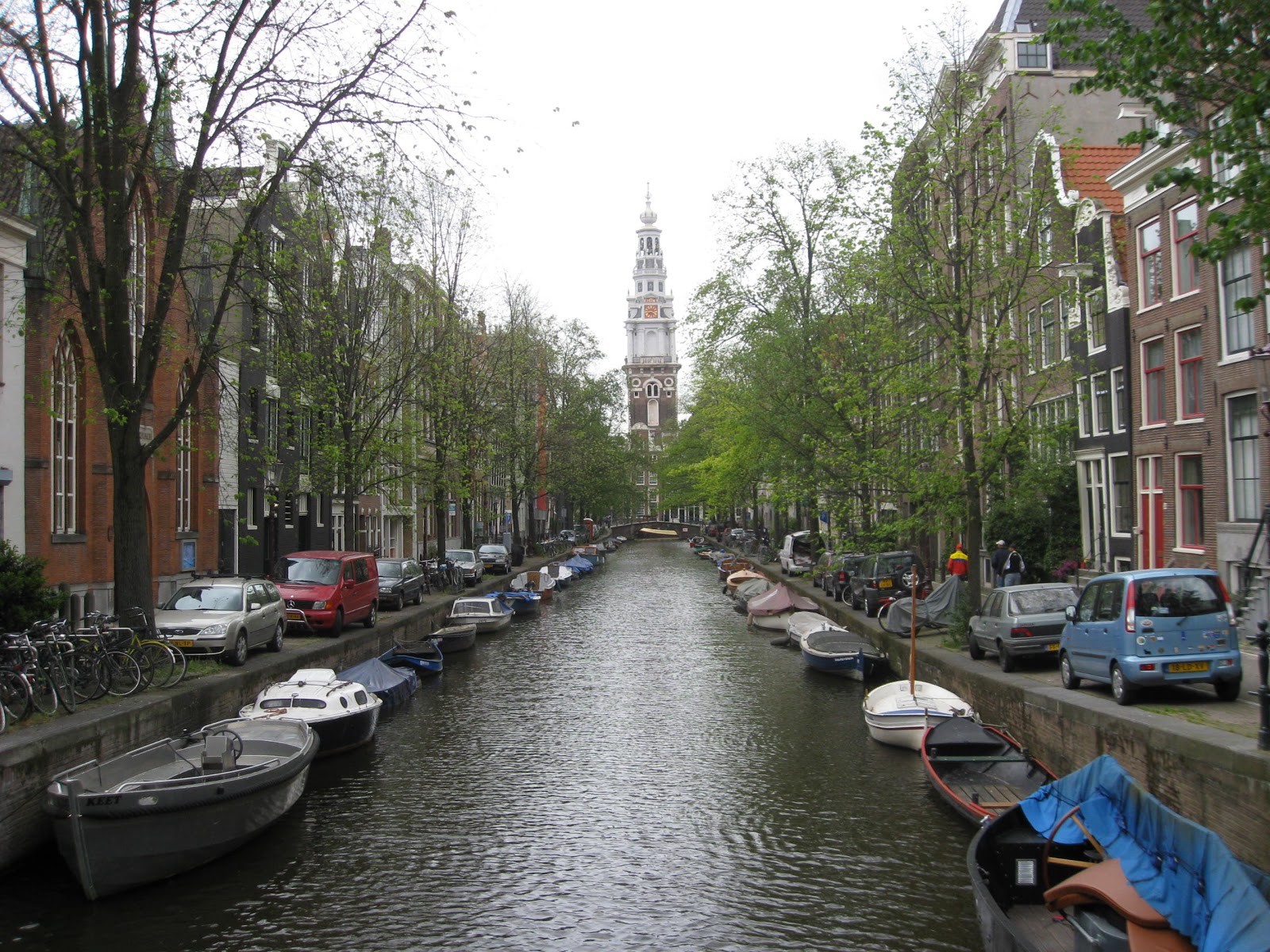
My favourite view in Amsterdam, the Groenburgwal
When my son Daniel was stillborn in February 1998, someone sent me the following piece:

When you're going to have a baby, it's like planning a fabulous vacation trip - to Italy. You buy a bunch of guide books and make your wonderful plans. The Coliseum. The Michelangelo David. The gondolas in Venice. You may learn some handy phrases in Italian. It's all very exciting.

After months of eager anticipation, the day finally arrives. You pack your bags and off you go. Several hours later, the plane lands. The stewardess comes in and says, "Welcome to Holland."
"Holland?!?" you say. "What do you mean Holland?? I signed up for Italy! I'm supposed to be in Italy. All my life I've dreamed of going to Italy."
But there's been a change in the flight plan. They've landed in Holland and there you must stay.
The important thing is that they haven't taken you to a horrible, disgusting, filthy place, full of pestilence, famine and disease. It's just a different place.
So you must go out and buy new guide books. And you must learn a whole new language. And you will meet a whole new group of people you would never have met.
It’s just a different place. It's slower-paced than Italy, less flashy than Italy. But after you've been there for a while and you catch your breath, you look around.... and you begin to notice that Holland has windmills....and Holland has tulips. Holland even has Rembrandts.
But everyone you know is busy coming and going from Italy... and they're all bragging about what a wonderful time they had there. And for the rest of your life, you will say "Yes, that's where I was supposed to go. That's what I had planned."
And the pain of that will never, ever, ever, ever go away... because the loss of that dream is a very very significant loss.
But... if you spend your life mourning the fact that you didn't get to Italy, you may never be free to enjoy the very special, the very lovely things ... about Holland.

Now, at the time, this piece seemed neither relevant nor helpful, nor especially sensitive. It had, in fact, been written by Emily Perl Kingsley about the experience of bringing up a disabled child, and so it did not seem at all appropriate to us. 'Afghanistan,' I'd growl, whenever I thought of it. 'Or Siberia,. Or Hiroshima just after they'd dropped the bomb. Those would be more suitable metaphors. Not bloody Holland.'

And then -  oh irony! oh coincidence! - just over a year later, we moved. To bloody Holland. And not at all at a time when I wanted to live there, or indeed live anywhere that wasn't my own home among my friends and family and people who spoke my language.

We were there for eight years. It was hard, and I was homesick, and depressed. I envied anyone who lived where they wanted to live. I found it hard to accept that I couldn't have that control over my life.

And then, you know what, there were windmills and glorious tulips and Rembrandts. There were Van Goghs and Mondriaans and wonderful new friends and beautiful parks. There was cycling and walking and picnics in the forest and many, many other lovely things. Amsterdam, it turned out, was a healing place.

I can never be as even-handed as Italy versus Holland when it comes to a child dying. I'm sure that many parents of disabled children would struggle with the concept as well. But truly, life without Daniel has not been as bleak or pointless as first we feared. Our lives took a different path, and that we learned a great deal along the way. It wasn't quite Italy/Holland -  more like going to boot camp when you were expecting a spa break. It's not what you expect, and it's extremely hard and unfair -  but in the end it's not a completely worthless experience.

I was reminded of this story last week, in synagogue for Kol Nidre, the service on the eve of the Day of Atonement. The rabbi read Emily Perl Kingsley's words and spoke about the consolations one can find in troubled times, whatever they may be. 'Living in Holland' was how he described it, and it was truly surreal as his rhetoric described my actual experience.

So, writers, be careful with your metaphors. Think them through. Someone may end up living them.

Sunday, 11 September 2011

Memories of 9/11

We were living in Amsterdam. My children were 1 and 5. My husband’s cousin had come to stay and I   switched on the television so that the children could watch Tweenies while we had a cup of tea and a chat.The Tweenies weren’t there. Instead there was an office building, a blue sky. As we watched – irritated, the children whining for their programme – a plane smashed into the building.
What on earth? There was no sound, but a caption on screen said: ‘Pictures from the WTC.’ I only knew one WTC…the Amsterdam WTC, right next door to my husband’s office. I must have switched onto a Dutch channel, I panicked, this must be happening just down the road. What on earth? Was he OK?
Then the sound kicked in, and it was the BBC, and it was New York. And so my first feeling as I comprehended what was happening and where, was -  momentarily - relief.
Ten years on, I still feel bad about those five seconds of relief.

Sunday, 4 September 2011

What I did (and didn’t do) this summer.

Soller, Mallorca
1)     Just before school holidays begin. Take son to buy uniform for his new school. Bought everything huge and in duplicate, so we will never have to do it again. Massive bill. Unusual and transitory sense of being organised and in control. 
2)     School holidays begin. Lecture family about my need to write in peace and quiet, for at least a few hours every day. They will have to amuse themselves. Tough.
3)     Son has reading list for new school. Ignore instruction saying he has to read one from each genre (five books) and tell him his challenge for the holiday is to read all 25. Then change that to 24 because I don’t like the sound of one of the authors.
4)     Daughter has nothing to wear. Take her to mall and buy stuff for her.  Slightly less massive bill. No bikinis take her fancy. Gnash teeth. Beg her to buy bikini because it is in sale, even though she hates it. She refuses. Buy school skirts. Suggest that she tries them on so that if necessary we can change them. ‘Later,’ she says.
5)     Son starts cricket summer camp. Sun is shining, son is happy. Rush to Starbucks and write and write and write.
6)     Day two of cricket camp. It is raining. Son gloomy and bored. Daughter has nothing to wear. Suggest she tries on school skirts. ‘Later,’ she says.
7)     Inspiration. We spend rainy day visiting lovely grandparents. Leave daughter there overnight with instructions to grandma to take her to buy bikinis. Hand over cash.
8)     Day three of cricket camp. It is sunny, son is delighted. Rush to Starbucks. Write and write and write. Daughter texts pictures of bikinis she has bought with grandma. Then texts picture of price tag showing they were cheaper than the sale bargain she rejected. Huh.
9)      Day four of cricket camp. Rain. Drive to grandparents to pick up daughter and bikinis, taking computer, go to their local library, write and write and write. Happy memories of visiting this library every week throughout childhood. Notice that teen section is a measly two bookcases. Do they have my books? They do not.
10) Cricket camp week two. Son decides he’s not enjoying himself as much as last week. ‘I’m not sure if I want to go this week,’ he says.  Gnash teeth. Drop him off. Go to Starbucks and write and write and write.
11)  Cricket camp week two, day two. ‘I really don’t want to go today.’ Drop him off. Starbucks. Write and write and write.
12)  No more cricket camp. Really not enjoying it.  Tell him he has lots of books to read. Try and write at home. Concentration shot to pieces.
13)  HOLIDAY! We are off to Mallorca. Decide to take laptop so I can get up early every day and keep writing.
14) Midnight before holiday. We are getting up at 4am to go to Mallorca. Power cable for laptop breaks. Gnash teeth. Decide to take lightweight Netbook instead, and download manuscript onto Kindle.  Congratulate self at techno know-how and calm under pressure.
15)  Arrive Mallorca. Gorgeous but hot. Very hot. Family shrivel and droop in the sunshine. ‘I hope you’re not going to be too pathetic to do some sight-seeing,’ says husband.
View from the pool
16)  Too hot to write. Too hot to think. Sit in shade and admire view and read Caitlin Moran’s How to Be a Woman. ‘Stop laughing out loud,’ instruct children, ‘you’re embarrassing us.’
17)  Day 2. Find shady spot and write and write. Son has made friends with other children at pool. Somehow we fail to notice that he has spent six hours in and out of the pool, only reapplying Factor 50 sun cream once.
18)  Son has terrible sunburn. Plus he is vomiting (but has not got sunstroke, we check on internet). Spend day sitting in darkened room with him, reading teen romances (research!). Become obsessed with American book Anna and the French Kiss by Stephanie Perkins. Why does a boy with an English accent pronounce Anna ‘Ah’na’? Why does he talk about ‘transit systems’? Why has his mother never divorced her rich but abusive husband? Daughter advises me to get a life. I pre-order sequel.
19)  Husband is bored with sitting around doing nothing except reading (possibly because he is reading serious books about Spain, and not teen romances). We go on a train to Palma. Palma extremely hot, but interesting. We wander around a big department store, and I take pictures in the book department of Spanish translations of books written by friend. ‘What are you doing?’ say children. ‘Stop! You’re being embarrassing!’ We visit English language bookshop. Ditto.
20)  Next day. Husband still bored. Using son’s sunburn as excuse for another day trip. Today we go to Deia, beautiful village and former home of poet and author Robert Graves.  It is very hot. ‘It’ll be really interesting,’ says husband.
21)  Drive through Deia. Nowhere to park. Turn around and drive back. Just as I am declaring it completely impossible to park -  we will have to abandon trip -  a space comes up. Park. Walk through Deia. Children are hot and thirsty. Find a café, buy them drinks. Graves’ house is a fifteen minute walk down the road. Decide to leave grateful children in café (NB They are 15 and 11. We were not abandoning tots)
22)  Walk to Graves’ house. It is midday. The sun beats down. Arrive at Graves’ house, feeling as though I have trekked through the Sahara desert. Discover there is large car park at Graves house.
Robert Graves' study.
23)  Husband is correct. Graves’s house is interesting. Also air-conditioned. Learn about his love triangle, with several wives, lovers, others. Learn about his many children, some of them abandoned in London when Graves made his home in Deia. Contemplate his tranquil study, where everything was -  is – just the way he wanted it. Learn that Graves liked to work in complete silence. Huh.
24)  Persuade daughter to read manuscript of book-so-far on my kindle. Her verdict: ‘You’re a pervert.’
25)  Transfer from hotel to villa. We have swimming pool in garden. We have short walk to beach. We have no internet connection though.
26)  We have satellite televison. Husband and I watch interesting play set in WW2. Seems to be an experimental script in which a narrator described every action on the screen. After some time realise that this is not an experimental script at all, but we are on a channel which has a commentary for blind people.
27) Ask husband if he’d known that all the time. He thought it was an experimental script as well.
28)  Satellite stops picking up a signal at the climax of the play. Does this every night of the holiday.
29)  Decide on a strategy to make the most of holiday without suffering from the heat. We have to get up and do things early in the morning, then take a siesta, then do more things in the evening.
30) Next morning wake at 11am, as usual. Kindle battery is flat. No way to charge it.
31)  A few lazy days, in which I read a lot and write a bit. Go to Irish pub to watch Manchester United play Spurs. A Chelsea fan says to my husband: 'I see you support Manchester United, I don;t expect you come from there.' 'Actually, I do,' he replies.
32)  Visit Alcudia which has a bull ring and Roman remains. Complain loudly about having to walk (in searing heat) through fields for HOURS to see Roman theatre. Surprised to find on walk back that HOURS was only five minutes.
Red devil
33)  Church of St Jaume, Alcudia. Find picture of St Michael trampling on Manchester United mascot, the red devil.         
34)  Holiday comes to an end all too soon. We agree that we had a brilliant time, we love Mallorca, the heat was no problem at all.
35)  Back to England. Pouring rain greets us at Luton Airport. House smells musty and damp. ‘This is the way the house used to smell when we moved back in from Amsterdam!’ say the kids Hmm.
36)  Go through post. Where are daughter’s exam results? Where is new electrical cable for laptop? It is a bank holiday, and we will have to wait two whole days for these things. On the other hand, a box of books has arrived from Amazon, the books my daughter wanted to take on holiday with her.
37)  Try and email holiday writing from Netbook. Netbook’s internet server seems to be broken.
38)  Shall we go and see The In-Betweeners Movie at the cinema or One Day? Daughter is horrified at the idea of us going to see the former. Manages to persuade husband that we will be thirty years older than anyone else there. So we see One Day. Hoot with laughter at Anne Hathaway’s accent, otherwise unimpressed. Two self-pitying people fall in love excruciatingly slowly, then..WHAM! And more self-pity. Nothing like as good as the book.
38a) Manchester United beat Arsenal 8-2. Family united in joyous celebrations (err...apart from my brother and nephew who support Arsenal).
39)   Bank holiday over.  Pick up power cable for laptop at post office. Charge up laptop, and try and load Netbook writing onto memory stick. Netbook does not seem to recognise memory stick. Hit head against wall.
40) Son is due to do watersports summer camp this week. Arrive at camp. Lady at reception points out that I have not booked the six hour day camp, but instead the two hour evening camp. ‘Come back at 4.30pm,’ she says. I protest that my booking letter said 10am. Go home. Booking letter says 4.30pm. Gnash, gnash.
41) Daughter and I set off to mall to buy dress that she spotted over the weekend  -  it was too big, so we ordered it in a smaller size. Halfway there, remember her exam results.  Ring school in panic, they say we will have to come in and get them. Buy dress (and jumper, and jewellery, and other stuff that I have forgotten), eat sushi, rush to school. Hurray! Daughter has done very well in her sociology exam (half of GCSE). Very proud of her. Join queue to buy school uniform -  which can only be bought from the school. After two minutes realise that we will be in queue for approx three hours, in order to buy one jumper and a tie. Abandon queue. Remember doing same thing last year. Gnash teeth.
42)  Son loves evening class at watersports centre. I go to Sainsburys.
43)  Next three days, son learns canoeing, kayaking and sailing. I write for one and a half hours each lesson in local café. Each day I rewrite the same chapter. Cannot move on without words trapped in Netbook.
44)  Friday. There is a get-together planned for son’s new class at new school. They had one earlier in the holiday, and I enjoyed meeting the parents and getting a look at the kids. This time son and friend would rather play on the Wii. ‘We’re going to know these people for the next seven years,’ they say. ‘We've friended them on Facebook. We don’t have to go and spend time with them now.’
45)  Weekend. Husband and I go and see The In-Betweeners. Notice with some relief that we are far from the oldest people there. Laugh hysterically throughout. All the way home husband shares reminiscences of teenage holiday to Fuengerola with best friends. Remarkable similarities.
46)  Meet another parent whose child is going to son’s school. How many books has he read from the reading list, I enquire. ‘He’s read four out of five,’ he says. ‘How about your son?’ ‘He’s read 20.’ Later, Son: ‘Olly’s only read four of those books.’ Daughter: ‘You were conned. You’ll never hear anything about them again.’
47)  First football match of the season for son’s team. It is pouring with rain. Goalie fails to turn up, so son is in goal for second half. He has no goalie gloves, but it doesn’t matter because he has no saves to make. His team wins 2-0.
48)  Tomorrow is the last day of the school holidays. Our plans…I’m taking Netbook to be mended. Dropping off daughter and niece at the mall. And then son and I are going to the school uniform shop. Funnily enough, I forgot to buy sports shoes. ‘Last time I drove past there, they were queuing out onto the street,’ says my sister. Must remember to get daughter to try on school skirts.
49)  Tuesday. Son starts new school. From now on he will leave the house at 7.10am and not return until 5pm. I will be able to write and write and write. But hang on, it’s daughter’s first day too. Or is it? ‘I’m just going in for an hour to pick up my timetable,’ she says. When is this hour? 2.10pm.
50)  Wednesday September 7th. Everyone back at school. I have until the end of the month to meet my deadline. Tick tock.

Tuesday, 30 August 2011

Me and my shadow...


It's work! That's what I tell my family when I'm hunched over the computer 'networking' on Facebook, or staring into space, thinking about my plotline while ignoring them completely.
My shadow for the day
Even when I'm doing the actual arduous, gut-wrenching, creative job of actually writing, you don't see much, beyond a slightly demented looking woman staring at a screen, often mouthing words and occasionally pulling out her hair.
On the other hand, sometimes my work is much more visual. I do school visits. I take part in literary festivals. I have lunch with my agent. Sometimes I get to go to award ceremonies and applaud as Jason Wallace picks up another well-deserved prize....
 When 13-year-old Hudi Charin asked if she could spend a day with me as part of her school's work experience scheme, it was a bit of a dilemma. Drum up a school visit to entertain her? Or let her sit and watch me mouthing at a screen? Here's Hudi's report of her day...with my comments in italics..

My school's work shadowing day was something we had all known was coming up in the last couple of weeks in July.

Some people were off with their parents, others going to places that they were not so interested in.

However, I was lucky enough to be able to spend my day work shadowing the author of some of my favourite books; When I was Joe; Almost True and most recently, Lia’s Guide to Winning the Lottery.
I have always wanted to be an author,  since before I can remember really, and knowing that I would be shadowing a real one (hmmm...not sure that I always feel like a real one. Actually, maybe I should go and shadow a real author one day) was an amazing experience for me and truly generous of Keren to let me do so.

Keren showed me into her house, (argh! messy!)  then packed up her laptop, telling me that she liked to sit down to write after a long (short) walk in the woods near where she lives. So off we went.

During the walk, I had a chance to ask her some questions...

ON BEING AN AUTHOR

What sort of things do you do in your job?
I write and edit, go to schools, attend award ceremonies and festivals... and lots of meetings.

What hours do you work?
At least two hours a day- but it all depends on the deadline.

How much annual leave do you get?
None!

What qualifications do you need for this job?
None- anyone can write- but I worked as a journalist which was very helpful.

What sort of training do you need to get into this job?
Basic language and writing skills.

What do you like most about your job?
I like to hear from my readers and the end result is very satisfying.

What do you like least about your job?
Rejection is tough. And so are days when  the writing will not flow.

What chances of promotion are there?
Awards and selling books to Hollywood. Being a bestseller! With writing, the sky is the limit.

Are there any benefits that come with this job?
The freedom to run your own life and be creative. Seeing your name on a book. Hearing from readers who have enjoyed your book.

Have any of the following factors affected your job and, if so, how?
-Changing technology
The invention of the laptop has helped and of course the internet and online access to books has affected me.
-Overseas or local competition
There is loads of competition everywhere, it is an extremely competitive market.
-Economic recession
Yes. There are now smaller advances and more people are buying second hand books nowadays where authors do not get a profit at all.
-Changing company ownership
Not so far!  (Funnily enough since Hudi spent her day with me, my publisherFrances Lincoln has been bought by Quarto.)

What advice would you give a young person preparing to enter the workplace?
For journalism- start small on a local newspaper and build your way up.
For writing books- don’t get put off by rejection, keep reading and writing. Try to analyse good books that you have enjoyed.

ON KEREN’S THREE GREAT BOOKS

What got you interested in writing for children?

I always enjoyed children's books and thought my style of writing would suit them.

When did you begin writing your first book, When I was Joe?

In April 2008.

How did you come up with the idea?

I saw a news report about a family who'd been involved in an armed robbery and had to go into witness protection.

How did you get into the mindset of a teenage boy?

 I just thought a lot about what it was like to be Ty -  all the pressures on him, all the changes in his life.

Did you always know that When I was Joe would lead on to a sequel?

No, I only started writing the sequel to amuse myself after I'd finished When I Was Joe and when I was looking for an agent to represent me.

After writing two books in the mindset of Ty, was it hard to write from the point of view of Lia in Lia’s Guide to Winning the Lottery?

Yes, much harder than I'd imagined it would be. I missed Ty a lot.

Lia has a very interesting personality that teenage girls can relate to but how do you relate to Lia?

She seemed to me to be a very typical teenage girl -  lacking in self-awareness, and a bit self-centred, but basically a good person. I remember feeling very misunderstood when I was about her age. 

Do you also relate a lot to your characters’ mothers too? When you characters are in an argument with their parents- how do you write from the character’s perspective?


I try and relate to all the characters, so I understand where they are coming from. That way the dialogue flows quite easily.


After our walk through the woods, Keren bumped into her friends (the perils of trying to work out of the house) and we sat down for coffee and cake (coffee for me. Cake for Hudi!) . Being an author was looking better and better to me!
I munched on a chocolate muffin while Keren worked on her next book- the sequel to When I was Joe and Almost True. I also had the great opportunity to read what Keren had written so far. (I was writing. But I was also watching Hudi read...seeing if she laughed at my jokes or not, seeing if she seemed to be enjoying herself. Felt very deflated when the huge manuscript I'd presented her with turned out to be so big because I'd printed the whole thing twice.) It is just as gripping and thrilling as the other two books in the series and it is not even finished! So, the minute it is published, go out and buy it! (this is assuming I ever get it finished...)
Just as I popped the last chocolate crumb into my mouth, Keren announced she had finished her writing for today.(I noticed that poor Hudi was shivering...and then I met another friend as we walked back through the woods...we went home and Hudi borrowed my daughter's hoodie...see what I did there?)
The huge stack...
It was now time to go off to the Frances Lincoln Children’s Books building to meet the team that works with Keren. When we got to the Frances Lincoln building, we were greeted by the people there... and a huge stack of 100 copies of Lia’s Guide to Winning the Lottery, brand new with the iconic red and white cover.
Keren got to work right away, while the woman who designed the cover of Keren’s latest book showed me around her department  (thank you, Arianna!)which was also very inspiring to me as I’m interested in graphic design.
When we arrived back downstairs, I helped Keren box away all the freshly signed books and it was now time for my amazing day with Keren to end. (3pm. I had to stop being a real author..sigh...and rush off to pick up my son from school. I offered to take Hudi along, so she could see the way mums have to juggle work and family, but unsurprisingly she wasn't quite so interested in that side of things)
It was great for me to learn that a writer doesn’t just have to spend their time shut up in a room typing away and, like Keren, I now try and get out and about to do my writing.
Many many thanks to Keren for giving up her day to show me what writing is really like and giving me this incredible experience! (And thank you Hudi  for not complaining that watching a writer write is actually very dull...not to mention watching a writer chat to random friends...and most of all for saying nice things about the work in progress. The perfect shadow!)

Thursday, 11 August 2011

London riots

It's been a strange and scary week in London.
Tottenham burns on Saturday night
A week in which rumours flew around on phones and in whispers.
A week of fire and smashed windows, destruction and looting.
A week of anger and excitement, and leaps to judgement and definition, distance and containment.
I've been reading newspapers, listening to the radio, unable to switch the television off until 1am. I've been staying in after 5pm, avoiding shops that I use all the time, asking my 15-year-old what she's seen on Facebook -  where's going to be next? I've found myself seriously wondering if I'm safe to go for a walk in the park at 5pm on a sunny August evening.

I've listened to politicians, pundits, churchmen and columnists. I've heard a lot of good sense and a load of old rubbish.

And I've had a few thoughts.

 There was a carnival atmosphere about the looting. It was as though people had responded to news reports about one riot and, instead of feeling horror and disgust, thought they were adverts for the summer sales. 'Come on down! Everything's free! Midsummer madness!'  Why did people react in such an amoral way? Why did they lack feeling for the community -  the shop-owners, the people living in burned out flats? 
Perhaps it's something to do with the huge inequality in British society -  after eight years in the Netherlands, it was the thing that shocked me most about reurning to London. It's not just the massive  gap between rich and poor, and the horror that the haves feel about sharing with the have-nots; it's the lack of care and contact between the two groups. A mutual contempt seems to have grown between rich and poor, fostered by media and politicians.
Maybe it's something to do with the rule-bending, greed and hypocrisy on display from the British establishment? If people see that MPs were happy to help themselves to tax-payers' money by falsifying their expenses, or twisting the rules to their favour -  and they could get away with it in most cases by paying back the money -  then perhaps they might expect to be able to help themselves to free stuff, when the opportunity arises?
It could be that if people saw politicans take personal responsibility for mistakes by resigning, that they'd take more responsibility for their own morality. Not just politicans. Business leaders. Bankers. Church leaders who enabled the abuse of children. Journalists who hacked phone messages from murdered children. Saying sorry, tinkering with the system, blaming subordinates is not enough. Removing yourself from power and making amends by working for the good of others, is the way to set a good example (would anyone caught up in a scandal now react as John Profumo did?).
How about restoring a bit of respect to our society? Respect means making snobbery and stereotyping (of everyone from Eton to Essex) as unacceptable as racism is becoming - sadly, that battle's not won yet. Respect means less media intrusion and pointless gossip and finger-pointing. If Britain wants to restore its respectability, it needs to embrace respect.
I'm pleased that David Cameron is going to do more to tackle gangs -  and he's right to look at the work of Strathclyde Police. I'm interested though that he didn't do more before now. Perhaps the scores of young men being murdered on city streets didn't matter enough.

I thought long and hard when I wrote When I Was Joe about what might make young people less likely to arm themselves with knives. Active policing, which enables police to build relationships with vulnerable youths was the best answer I came up with. Perhaps we'll get it now. I notice though that it's the neighbourhood officers who've already been cut in Mr Cameron's austerity measures.

I'm actually not interested in hearing from the rioters. I think it's pretty easy to understand the mentality which seeks to steal and destroy. They were stupid and dangerous and vile. They need something more drastic than mere punishment. I'd actually like to see some sort of national service brought back for these stupid jokers, so they could contribute something to our society and maybe learn a bit of discipline.

I'm much more interested in hearing from the kids who don't riot. The ones who work hard and become successful against the odds. The ones who stay honest and care about their communities. What makes them different from the rioters? Who helped them find their way? What can we learn from them? Boys like this one  who reminds me a lot of Nathan in When I Was Joe and Almost True.

Some wonderful things have come out of this terrible week.  I loved the jokes on Twitter, the English horror that Americans were tweeting #prayforLondon; the idea that the people of Crouch End (where I live) would respond to looters by pelting them with artisan sourdough loaves.
I loved OperationCupofTea on Facebook, which signed up people in their thousands to stay in and drink tea instead of rioting -  and all the sweet tea-drinking pictures posted on its page.
I loved that people came together to clean up after the riots, and called themselves the Riotwombles after a much-loved children's book.
I loved my local supermarket -  hurray for Budgens -  which set up a collection point for contributions of clothes and bedding to help the people made homeless in the fires in nearby Tottenham.
 I was impressed and awed by the courage and spirit of those people who'd lost everything -  in Tottenham, Croydon, Clapham Junction as they contemplated their future. By the smile on the face of  Asyraf Haziq Rosli, the Malaysian student attacked and robbed by rioters -  as they pretended to help him - who was able to say that he still wanted to stay in Britain and he felt sorry for his attackers.
And above all by the immense dignity and wisdom shown by Tariq Jahan, father of Haroon, one of the men killed during riots in Birmingham, who calmed tensions in the city by speaking out just hours after his son's death. In the light of the Islamophobia which mars our society, it's worth pointing out that both Mr Jahan and Mr Rosli are shining examples of good Muslim role models for us all.

I fear that we won't learn the right lessons from the riots. Already tonight, going out to eat in a crowded restaurant, it seemed crazy that only two days ago I was too nervous to meet a friend for a drink after dark. But if we don't change and learn -  all of us - then I'm certain of one thing. It'll happen again. And next time it will be worse.

PS  I wrote this and then I read this. And I thought yes, yes, yes, yes, yes. And in the Telegraph too. Maybe there is hope.


Thursday, 4 August 2011

Publication day!

Woo! Today is the official publication day for Lia's Guide to Winning the Lottery!
There's no party (August is a bit useless for parties, but we might do something in September) but there is a chance to get your name into my next book (hurry! I'm writing it now!) by entering this competition.  Read about what I'd have done if I'd won the lottery when I was 16 (not that there was a lottery in those far-off days) here  and about how I created the character of Lia's friend Shazia here.
You can get Lia on your kindle here   , if you live out of the UK here  and in all good bookshops, here or here
Read an excerpt here.

Read an interview with me about Lia here
And see a silly interview with  Fiona Dunbar, me and some sensible teenagers  here


That's enough links...hope you enjoy Lia, and if you do, please tell your friends/review on Amazon/let me know!